
A damaged windshield can affect visibility, structural support, and the performance of safety systems in a vehicle. When a windshield cannot be safely repaired, professional replacement provides a way to restore the glass while ensuring it is properly fitted and bonded to the vehicle.
Understanding the professional windshield replacement process can help drivers know what to expect when scheduling service. From the initial inspection to the final quality check, each step is designed to promote a secure installation and reliable performance.
Initial Inspection and Vehicle Preparation
Before removing the damaged windshield, a technician begins with an inspection. The extent and location of the damage are evaluated to confirm that replacement is appropriate. The surrounding glass, trim, vehicle frame, and other components are also checked for potential issues.
The vehicle is then prepared for the replacement. Technicians may protect the dashboard, seats, hood, and other areas from broken glass or installation materials. Trim and molding around the windshield are carefully removed as needed.
This preparation helps create a clean workspace and reduces the possibility of accidental damage during the replacement.
Safely Removing the Damaged Windshield
Removing an existing windshield requires specialized tools and careful handling. Technicians separate the glass from the adhesive that secures it to the vehicle while taking precautions around the painted frame.
Broken or damaged glass must be handled carefully to prevent injuries and avoid leaving fragments inside the vehicle. Once the windshield has been removed, the technician examines the bonding surface for damage or contamination.
The frame is cleaned and prepared for the new installation. Any appropriate remaining adhesive is addressed so the replacement windshield can establish a strong, consistent bond.
Preparing the Bonding Surface
Proper surface preparation is an important part of windshield installation. Dirt, moisture, debris, and contaminants can interfere with the adhesive bond.
Technicians prepare the bonding surfaces according to the appropriate installation procedure before applying new automotive-grade adhesive. Using the correct materials and preparation methods helps create a durable connection between the windshield and vehicle.
This step is especially important because the windshield needs to remain securely positioned while the vehicle is being driven.
Installing and Aligning the New Windshield
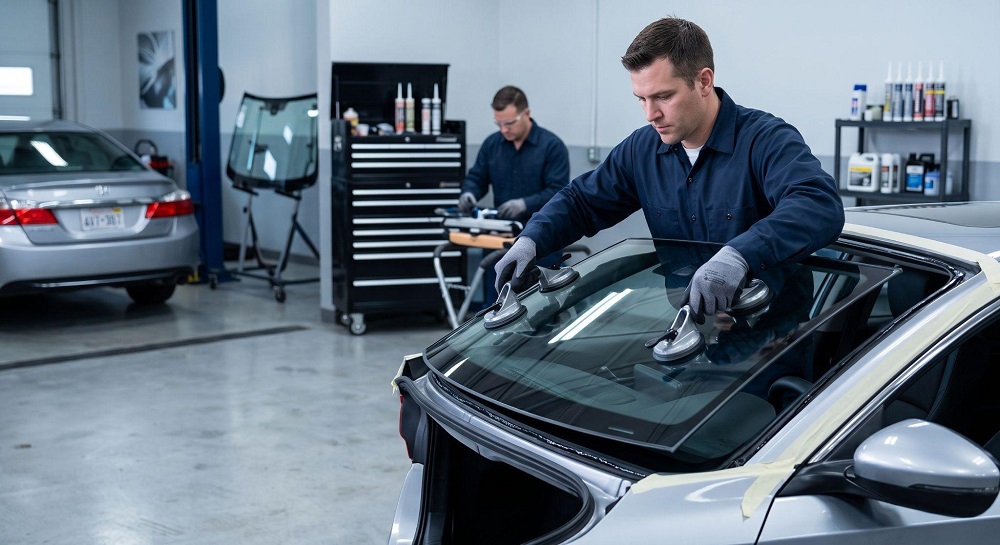
Once the vehicle and bonding surface are ready, the replacement windshield is carefully positioned. Professional technicians use specialized handling equipment to control the glass during installation.
Proper alignment is essential. The windshield needs to sit correctly within the opening so that the fit, seal, trim, and visibility are all appropriate.
Industry-approved automotive adhesives are applied according to the product and vehicle requirements. The windshield is then placed into position with care to maintain the correct adhesive bead and alignment.
Modern vehicles may also have cameras or other ADAS components mounted near the windshield. When applicable, these systems may require additional inspection or calibration following replacement.
Final Quality Checks
After installation, technicians perform a series of checks to verify the quality of the work. They look for proper alignment, consistent sealing, secure trim, and any visible installation concerns.
The windshield and surrounding area are also inspected for potential gaps or other issues that could allow water or air to enter the vehicle.
If the vehicle includes windshield-mounted safety technology, the appropriate post-installation procedures should also be followed.
Adhesive Curing and Post-Installation Care
Windshield adhesive needs adequate time to cure before the vehicle is driven. The required safe-drive-away time can vary depending on the adhesive, temperature, humidity, and manufacturer’s recommendations.
Drivers should follow the technician’s instructions regarding when the vehicle can safely be operated. They may also receive recommendations about avoiding certain activities immediately after installation, such as excessive pressure on the glass or unnecessary handling of newly installed trim.
Following these instructions gives the adhesive the best opportunity to establish a secure bond.
Why Professional Installation Matters
Windshield replacement involves much more than removing old glass and placing a new windshield into the opening. The condition of the frame, preparation of bonding surfaces, adhesive application, alignment, curing, and final inspection all affect the quality of the installation.
Professional service also provides an opportunity to identify vehicle-specific requirements, including ADAS procedures that may be necessary after windshield replacement.
For drivers searching for windshield replacement in Orem, understanding these steps can make it easier to recognize the importance of proper installation rather than treating windshield replacement as a simple glass swap.
Keeping Your New Windshield in Good Condition
Once replacement is complete, routine care can help preserve the new windshield. Avoid unnecessary impacts, address chips promptly, and pay attention to unusual leaks, wind noise, or changes in visibility.
If a new crack or chip develops, having it evaluated quickly may prevent additional damage and determine whether a repair is possible.
A professional replacement combined with proper post-installation care helps maintain clear visibility and dependable performance for the life of the windshield.
For Utah drivers, Glasshopper Auto Glass provides professional auto glass services with careful attention to installation, safety, and vehicle-specific requirements. When you need dependable windshield service, experienced technicians can help ensure the replacement is completed properly from preparation through final inspection.